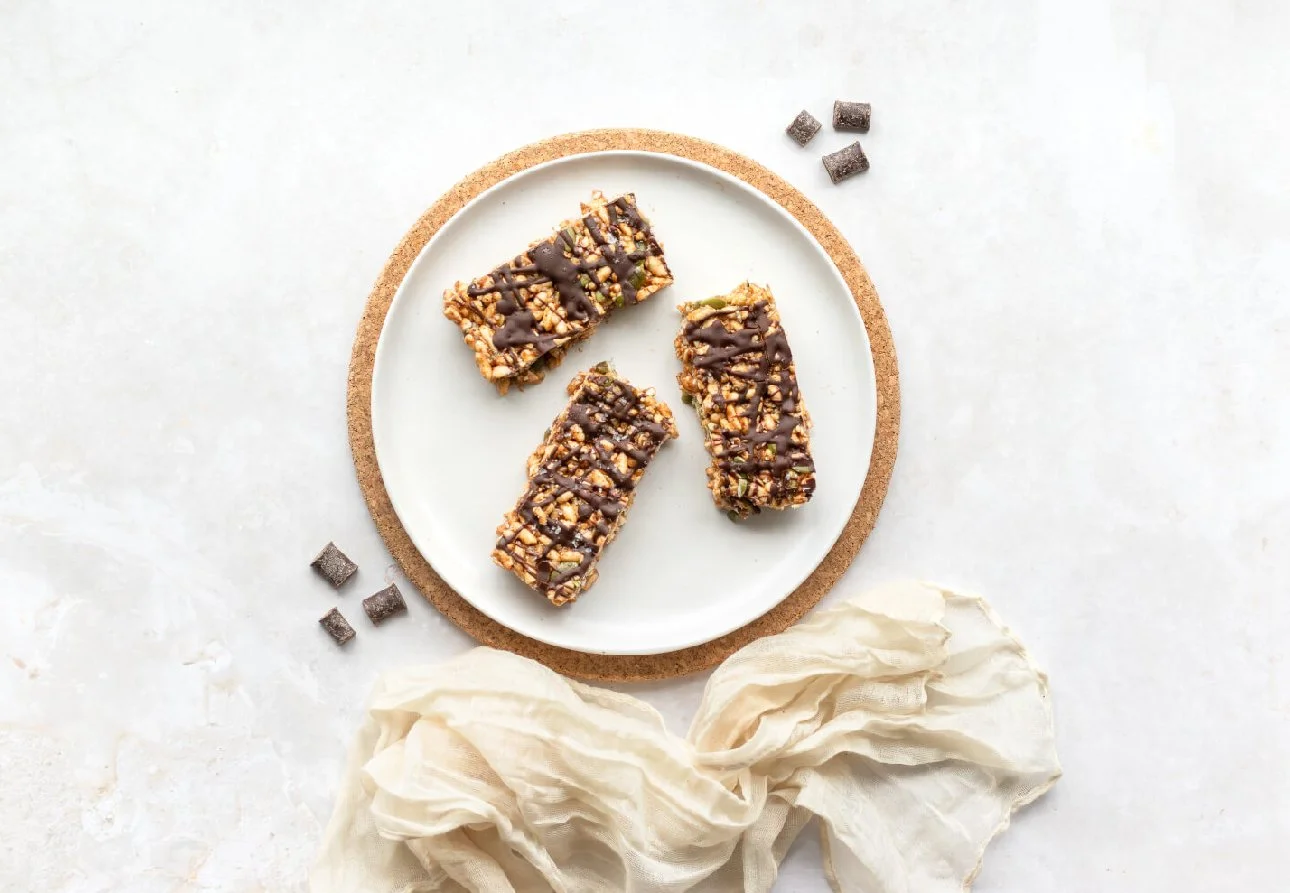
Snacking - Supportive, or Sabotaging?
Snacking can either stabilise your energy and nourish your body, or become the main source of ultra-processed food in your day.
For many people, it’s not main meals that create issues. It’s the handful of crackers while cooking dinner, the muesli bar between meetings, the picking on kids snack food while making the lunches, the biscuits with coffee, or the chips at 4pm when you get home from work and are ravenous. Snacks are often where processed food sneaks in.
Snacking itself isn’t the problem. It can be completely appropriate depending on your activity levels, your life stage, and how balanced your main meals are. The key is understanding whether you’re eating from true physical hunger or from stress, boredom, fatigue, or habit.
When we’re under pressure or running on empty, hunger can feel urgent. In these moments, the pleasure centres of the brain tend to override logic, and we reach for whatever is most convenient and appealing. Modern snack foods are designed to be hyper-palatable, typically combining refined carbohydrates, sugar, salt, and industrial fats in a way that overrides natural appetite regulation.
These types of snacks often lead to:
Rapid blood sugar spikes followed by crashes
Increased cravings later in the day
Ongoing grazing rather than truly filling you up
High-calorie intake with minimal micronutrient return
You may feel temporarily satisfied, but not truly nourished.
Tuning Into Your Hunger Cues
A well-balanced meal containing quality protein, healthy fats, fibre, and complex carbohydrates should keep you satisfied for a minimum of 4 hours. For many adults, eating every four to five hours works well. This spacing allows blood sugars to remain stable and gives digestion time to complete properly.
Periods without food during the day are beneficial for gut health and motility. The migrating motor complex - often described as the gut’s “housekeeping’’ - activates between meals to clear bacteria and debris. If you struggle with bloating, constipation, reflux, or general digestive discomfort, reducing grazing and allowing four to five hours between meals can make a significant difference.
That said, if you are genuinely hungry, a snack is absolutely appropriate. The goal is to keep it intentional rather than automatic.
Before reaching for food, it can help to pause and ask:
Am I physically hungry?
When did I last eat?
Do I need a snack, or do I need a proper meal?
Am I stressed, tired, or bored?
Sometimes what we actually need is a short break, a glass of water, or a few minutes of movement.
Building a Balanced Snack
When you do choose to snack, aim to combine at least two macronutrients. Pairing protein, fat, and carbohydrate slows digestion, improves satiety, and supports more stable blood sugars.
For example, an apple on its own will digest quickly and may leave you hungry again soon after. Pair it with nut butter or cheese, and it becomes a more satisfying and blood sugar–friendly option.
Nourishing Snack Ideas
Here are some of our favourite whole-food snack options:
Hard boiled eggs
Beef meatballs or chicken drumsticks
Frittata or egg cups
Greek yoghurt with a drizzle of honey, fruit and pumpkin seeds
Chia seed pudding
Beef jerky (without additives)
Hummus with veggie sticks
Apple or celery with nut butter
Olives with raw nuts or cold meat
Good quality cheese with seeded crackers, gherkins or pickled onions
Pâté with seeded crackers
Roasted chickpeas
Scroggin (raw nuts and seeds with a little dark chocolate)
Marinated or tinned shellfish (oysters, mussels)
Tinned salmon, sardines or tuna with crackers, nori or avocado
Bliss balls or healthy baking
Snacks are not the enemy. Unintentional grazing on refined, hyper-palatable foods is where problems tend to arise.
Keep snacks purposeful
Prioritise protein
Pair macronutrients
Allow time between meals for digestion to rest
When done well, snacks can support stable energy, hormone health, and gut function, rather than working against you.